Search This Supplers Products:DC Return PumpsDC WavemakersDC Protein SkimmersPond PumpsPond Pumps(VFD Tech)Pond Air Pumps
How to Choose a Reliable Aquarium Pump Manufacturer for Wholesale and OEM Projects
publisherDavid Yoon
time2026/09/05
- Looking for a reliable aquarium pump manufacturer for wholesale or OEM projects? This guide explains how to evaluate flow rate, head height, voltage, noise, energy efficiency, freshwater and saltwater compatibility, OEM/ODM capability, MOQ, lead time and after-sales support. Discover how Jinwa Aquatics supports distributors, aquarium brands and system integrators with DC, variable-speed and pond pump solutions.
Choosing the right aquarium pump manufacturer is an important decision for aquarium brands, distributors, importers, system integrators and commercial aquarium projects. A reliable supplier should provide more than a competitive unit price. Product performance, flow stability, operating noise, energy efficiency, application compatibility, OEM capability and after-sales support all influence the success of a long-term business relationship.
This guide explains how to evaluate an aquarium pump manufacturer before placing a wholesale or OEM order. It also introduces the technical and cooperation factors that buyers should review when sourcing aquarium water pumps from China or other manufacturing markets.
Start by Defining Your Aquarium Pump Application
Before contacting an aquarium pump factory, define where and how the pump will be used. Different applications require different combinations of flow rate, head height, voltage, materials, control functions and operating reliability.
A pump designed for a small freshwater aquarium may not be suitable for a large reef tank, a commercial aquarium filtration system or a koi pond. By identifying the application first, you can give the supplier accurate requirements and reduce the risk of selecting an unsuitable model.
Freshwater Aquariums
Freshwater aquarium pumps are commonly used for water circulation, filtration, return systems and aquarium equipment. Buyers usually focus on stable performance, low noise, compact dimensions, easy installation and reasonable energy consumption.
Saltwater and Reef Aquariums
Saltwater and reef aquarium applications require careful attention to material compatibility, sealing, corrosion resistance and long-term operating stability. A supplier should clearly state whether a pump is suitable for saltwater use and explain any installation or maintenance requirements.
Commercial Aquarium Systems
Public aquariums, aquarium stores, hotels, restaurants and display projects may operate pumps for extended periods. These projects often require reliable circulation, accurate flow control, easy maintenance, spare parts support and consistent supply over multiple orders.
Aquaculture, Aquaponics and Hydroponics
Aquaculture and aquaponics systems may require continuous water movement and dependable circulation. In these applications, buyers should evaluate the pump's flow performance, power consumption, operating environment and compatibility with the complete water system.
Koi Ponds, Garden Ponds and Water Features
Pond and waterfall applications generally require higher flow rates and stronger water-lifting capability than many household aquariums. A suitable supplier should offer submersible pond pumps, variable speed pond pumps or other models designed for the required flow and head height.
Check the Key Aquarium Pump Specifications
A professional aquarium pump manufacturer should provide complete technical information for each model. Product titles and marketing claims are not enough for engineering selection. Buyers should request a specification sheet, performance curve or test data when the pump will be integrated into a larger system.
Professional purchasing principle: Do not compare aquarium pumps by maximum flow alone. Actual performance also depends on head height, pipe resistance, fittings, filters and installation conditions.
Flow Rate
Flow rate describes the volume of water that a pump can move over a specific period. It is commonly expressed in litres per hour, or L/H, and gallons per hour, or GPH.
When comparing aquarium water pumps, do not evaluate maximum flow alone. Actual performance can change according to the installation height, pipe length, pipe diameter, fittings, filter resistance and other system conditions. Ask the supplier to provide the rated flow at relevant head heights whenever possible.
Head Height
Head height refers to the vertical distance that the pump can move water. It is especially important for return pumps, waterfall pumps, pond systems and installations where the pump is positioned below the aquarium or pond outlet.
A pump with a high maximum flow rate may not deliver sufficient water at the required head height. For this reason, the buyer should provide the expected vertical lift and piping arrangement when requesting a recommendation.
Voltage and Power Consumption
Aquarium pumps may be designed for different electrical systems and applications. Common specifications include 5V, 12V and 24V DC, as well as AC products for other market requirements.
The buyer should confirm the operating voltage, rated power, plug type, controller requirements and compatibility with the destination market. For an international wholesale order, the supplier should also confirm whether the product, adapter and packaging can be configured for the target country.
Speed Control and Flow Modes
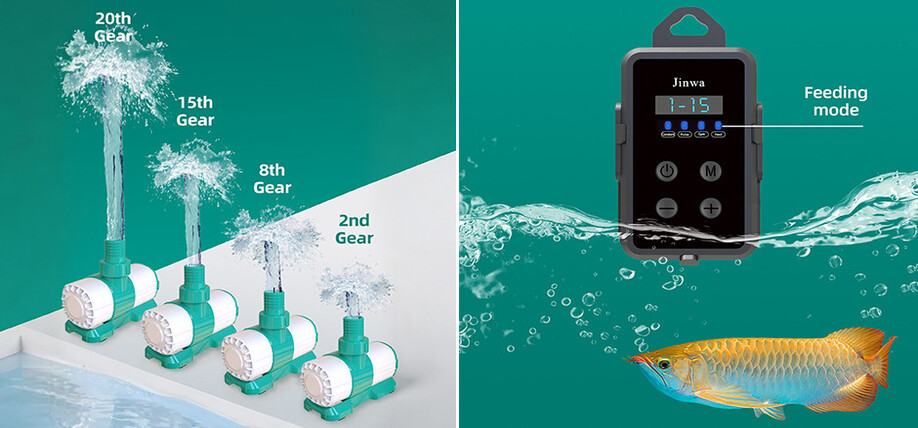
A variable speed aquarium pump allows users to adjust water movement according to the needs of the aquarium or water system. Depending on the model, control functions may include constant flow, pulse flow, gyre flow and feed mode.
Evaluate Noise, Energy Efficiency and Operational Safety
For many aquarium applications, performance is only one part of product quality. Noise, energy consumption and safe operation affect the end-user experience and can influence product returns, reviews and after-sales costs.
Low-Noise Operation
Low operating noise is particularly important for home aquariums, offices, bedrooms, retail stores, hotels and restaurants. Buyers should ask how noise is measured and whether the product has been tested under realistic installation conditions.
Energy Efficiency
Aquarium pumps may operate for many hours each day. Energy-efficient motor and controller designs can help reduce operating costs, especially in commercial systems and large installations.
A variable speed pump can allow the user to adjust flow instead of operating continuously at maximum output. The supplier should provide actual power consumption data for each operating condition so buyers can evaluate energy performance accurately.
Low-Voltage Design
Low-voltage DC designs can help improve operational safety in aquatic environments when the product is installed and used according to the instructions. Buyers should confirm the complete electrical configuration, including the pump, controller, adapter, cable, connector and protection requirements.
Confirm Freshwater and Saltwater Compatibility
Freshwater and saltwater environments place different demands on aquarium equipment. Before ordering a pump for marine or reef applications, confirm the materials and operating conditions with the manufacturer.
Important questions include:
- Is the pump designed for freshwater, saltwater or both?
- What materials are used for the housing, impeller and shaft?
- Are the seals suitable for continuous aquatic use?
- Are there operating limits for salinity, temperature or water chemistry?
- What cleaning and maintenance schedule is recommended?
- Are replacement impellers and other spare parts available?
Review the Manufacturer's Factory and R&D Capability
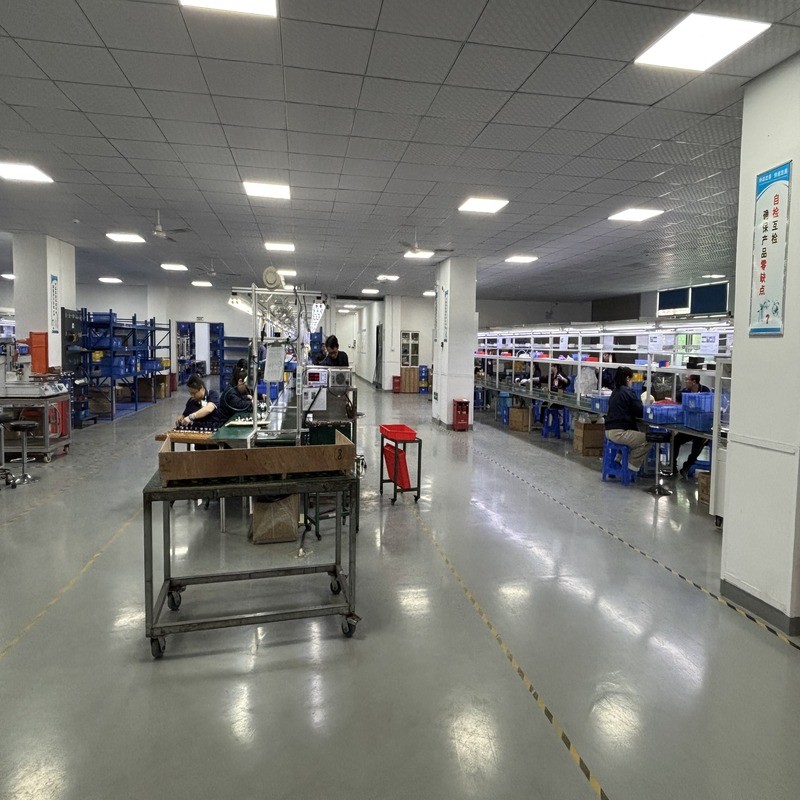
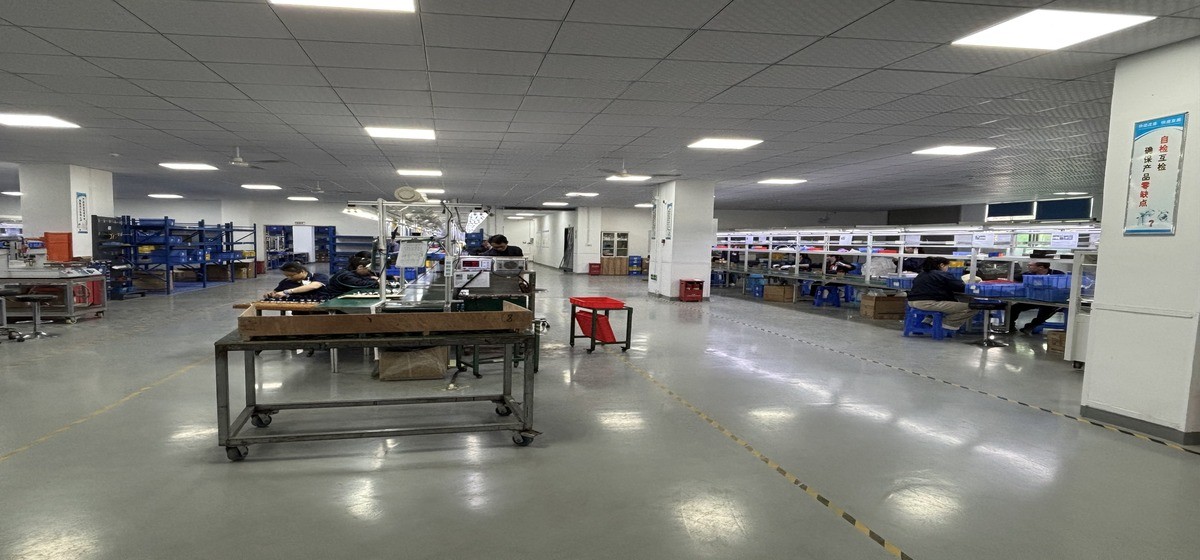
A reliable aquarium pump supplier should be able to explain how products are designed, assembled, tested and supported after delivery. A trading company may be suitable for some purchasing needs, but brands and long-term distributors often benefit from working directly with a manufacturer that controls important parts of the production process.
Manufacturing Experience
Industry experience can help a supplier understand recurring problems related to motor performance, impeller balance, sealing, controller design, noise reduction and long-term operation. Experience should be evaluated together with current production capability, quality procedures and product documentation.
Integrated Production Capability
Integrated production may include controller development, parts processing, pump assembly, testing and final inspection. This can make communication more efficient and may help the supplier respond more effectively when a buyer needs a specification change or product improvement.
Production Scale and Delivery Stability
For wholesale buyers, production capacity is relevant because supply interruptions can affect inventory planning and market commitments. Ask about standard lead time, peak-season capacity, production scheduling, quality inspection and the supplier's ability to repeat the same specification over multiple orders.
Ask About OEM, ODM and Private Label Services
OEM and ODM requirements vary from one buyer to another. Some distributors only need a logo and customized packaging. Other brands may require a different controller, cable, plug, housing, mold, product specification or complete product development process.
Depending on the project, customization may include:
- Brand logo and product marking;
- Retail box, master carton and user manual;
- Cable length, connector and plug configuration;
- Product color or housing design;
- Controller appearance and interface;
- Voltage and power configuration;
- Product mold or structural changes;
- Product labels and barcode information;
- Technical documents for the buyer's market.
Do not assume that every model supports every type of customization. A professional supplier should confirm the available options in writing and identify the minimum order quantity, tooling requirements, sample approval process and production lead time.
Evaluate MOQ, Lead Time and After-Sales Support
A suitable supplier should provide practical answers about the full purchasing process. The lowest quoted price may not represent the lowest total cost if the order has an unsuitable MOQ, unclear lead time, weak documentation or limited after-sales support.
Minimum Order Quantity and Samples
Ask whether the MOQ applies to a single model, a color, a voltage configuration, a packaging design or the total order. A customized version may require a higher MOQ than a standard model because it can involve special materials, packaging or production setup.
Request samples before mass production when the pump will be sold under your brand or integrated into a system. Evaluate the sample for flow, noise, power consumption, controller operation, packaging, installation and compatibility with the target application.
Production and Shipping Lead Time
The supplier should state the expected time for sample preparation, packaging confirmation, production, inspection and shipment. Lead time may change according to customization, order quantity, component availability and the destination market.
Warranty and Spare Parts
After-sales support is important because aquarium pumps are working components. Ask about the warranty period, common replacement parts, troubleshooting support, claim procedure and response time for quality issues.
Why Consider Jinwa Aquatics as an Aquarium Pump Supplier?
Jinwa Aquatics positions itself as a specialized water pump manufacturer rather than a general aquarium accessory supplier. Its product range includes DC return pumps, bottom-suction pumps, wavemakers, submersible pond pumps and variable speed pond pumps.
The company's product and solution information highlights several features that may be relevant to distributors and project buyers:
| Buyer Requirement | Jinwa Aquatics Offering |
|---|---|
| Aquarium circulation | DC return pumps and aquarium water pumps |
| Freshwater and marine use | Selected models for freshwater and seawater applications |
| Adjustable water movement | Variable speed and multiple flow modes on selected models |
| Pond and waterfall systems | Submersible pond pumps and variable speed pond pumps |
| OEM and ODM cooperation | OEM/ODM support and custom mold development information |
| Distributor cooperation | Partner training, technical support, spare parts and marketing support |
The most suitable supplier depends on the buyer's exact requirements. Jinwa should therefore be evaluated through the same purchasing process as any other potential supplier: confirm the model, review the technical data, test samples, agree on quality standards and establish clear commercial terms.
Questions to Ask Before Placing a Wholesale Order
Use the following checklist when comparing aquarium pump manufacturers:
- What aquarium or pond application is the selected model designed for?
- What are the rated flow rate, maximum flow rate and maximum head height?
- What is the actual power consumption at different speed settings?
- Is the pump suitable for freshwater, saltwater or both?
- What voltage, plug and controller options are available?
- What are the MOQ and lead time for standard and customized models?
- Can the supplier provide OEM packaging, private labeling or custom molds?
- What inspection and performance tests are completed before shipment?
- What warranty and spare parts support are available?
- Can the supplier provide samples, technical documents and export documents?
Conclusion: Choose a Supplier for Long-Term Performance
Selecting an aquarium pump manufacturer should be based on more than price. The right supplier should match the pump to the application, provide reliable technical data, support sample approval, offer practical OEM or ODM options and maintain consistent quality for repeat orders.
Jinwa Aquatics specializes in aquarium and pond water pump solutions, including DC return pumps, variable speed pumps, wavemakers and submersible pond pumps. If you are sourcing aquarium pumps for wholesale, private label or OEM projects, contact Jinwa with your required application, flow rate, voltage, head height, target quantity and branding requirements.
Request an Aquarium Pump Catalog or OEM Quotation
Looking for a reliable aquarium pump manufacturer for your next project? Send Jinwa Aquatics your application, required flow rate and head height, voltage, freshwater or saltwater requirements, estimated order quantity, target market and OEM, ODM or packaging requirements.
The Jinwa team can then recommend suitable models and provide product information or a quotation.
Note: Before publishing, confirm current company figures, certifications, MOQ, warranty terms, delivery times, product specifications and customization services with the Jinwa sales or engineering team. Only publish certifications and performance claims that can be supported by current documentation.
Source: Jinwa Aquatics Official Website · VPF Series Product Page · Partner Program